The figure that counts is the R-value of the whole roof, not the number on one roll. This calculator adds the roof and ceiling's own value to one or two layers of insulation, so you can see what a top-up over old wool really gives, then compares the total with the minimum SANS 10400-XA sets for your climate zone. For the thinking behind it, read how thick ceiling insulation should be and thermal insulation; if you don't know your zone, the zone finder gives it by town.
How the layers add up
Each layer's R-value is its thickness in metres over its conductivity, and layers in a row simply add. The base value covers everything that is not insulation: the air film outside, the roof covering, the roof space, the ceiling board and the air film inside. The tool uses 0.35 for a tiled roof with an underlay and a ceiling, the standard's own figure, 0.30 for metal sheeting and 0.25 for a plastered concrete slab.
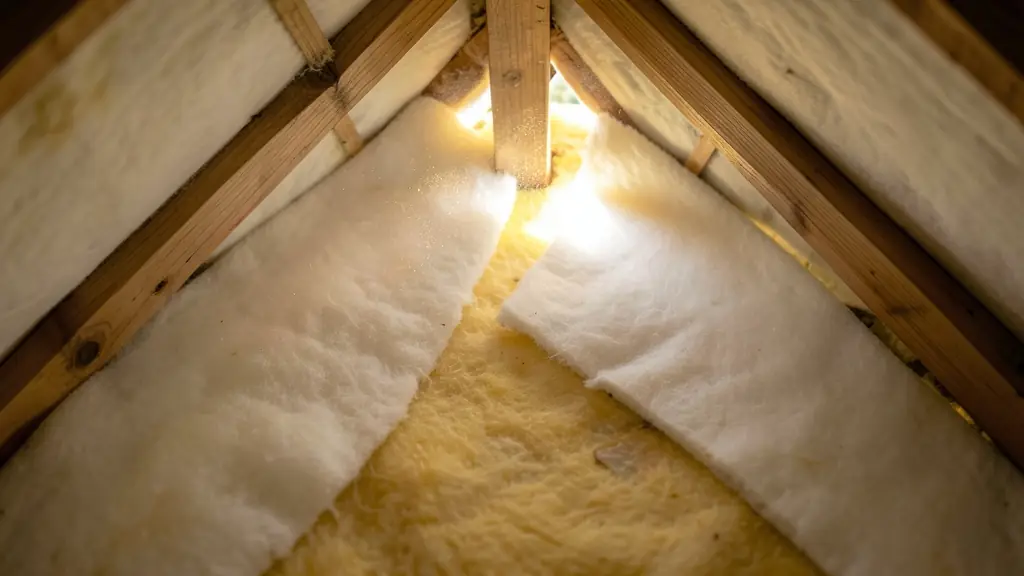
Take a tiled roof with 100 mm of old glass wool: 0.35 plus 2.50 is R2.85, short of the R3.7 asked in zones 1 to 7. The tool says 34 mm more of the same material reaches it. Lay 100 mm of polyester across the old layer instead and the total is about R5.18.
The zone minimum
SANS 10400-XA:2021 sets a minimum total roof R-value of 3.7 in zones 1 to 7 and 2.7 in zone 5H, the humid KwaZulu-Natal coast. It applies to new buildings and additions that need plans. Nothing forces you to reach it in a house you already live in, but it is a sensible target, and your architect or the building inspector confirms what a set of plans needs.
What the sum leaves out
The sum assumes each layer keeps its full thickness. Insulation that is squashed under boxes, has settled over the years or stops short of the wall plates gives much less than its figure. An old layer is worked out with the same conductivity as new material, which flatters a dusty, flattened blanket. Foil under the roof adds R-value too, but how much depends on the air gap and the dust on it, so it is not in the list.
Questions for the supplier
- Which total R-value the quote reaches, with the roof's own value included.
- Whether the product's figure is tested at the thickness you will lay.
- Whether the new layer goes across the old one.
- Whether they can give a certificate if the work is for plans.
Frequently asked questions
Why does the tool give a different R-value from the label?
Is a higher total always better?
Can I count the foil under my tiles?
What happens after I send a request from this page?
More calculators
- Ceiling insulation calculatorCeiling size and material in, rolls to buy and the R-value out
- SANS 10400-XA zone finderTown in, climate zone, minimum roof R-value and thickness out
- Insulation savings calculatorHeat through the ceiling before and after, in kWh and rand a year
- Roof area calculatorFootprint and pitch in, sloped roof area and foil rolls out
- Isoboard ceiling calculatorRoom size in, boards, clips, joiners and cornice out