Roof insulation from heat is what most South Africans actually want when they first call an installer. Through a Durban, Lowveld or Limpopo summer, the roof is where most of the heat gets into a house, and a bare ceiling is the biggest single gap. The fix is rarely one product. A reflective layer under the roof cuts the radiant heat at the source, a thick layer on the ceiling slows what gets through, and ventilation and roof colour help both work better.
How a roof heats a room
Sun on dark tiles or tin heats the roof covering far above the air temperature. That covering radiates heat down into the roof space, which on a summer afternoon can climb well past 50 °C. The hot air and the warm underside of the roof then heat the ceiling boards, and the ceiling warms the room by radiation and contact. A bare ceiling acts like a warm panel above your bed, still giving off heat at 9 pm.
Two layers that work together
- Under the roof: reflective foil with an air gap below its shiny face reflects much of the radiant heat back up before it reaches the roof space. Dust on that face cuts its effect over the years.
- On the ceiling: a thick blanket of polyester or glass wool, or a ceiling insulation layer of your choice, slows conducted heat into the rooms. Compare products on the R-value printed on the bag, not on thickness or colour.
Foil alone helps in summer but does little for the winter side; the blanket does both.
Roof colour and ventilation
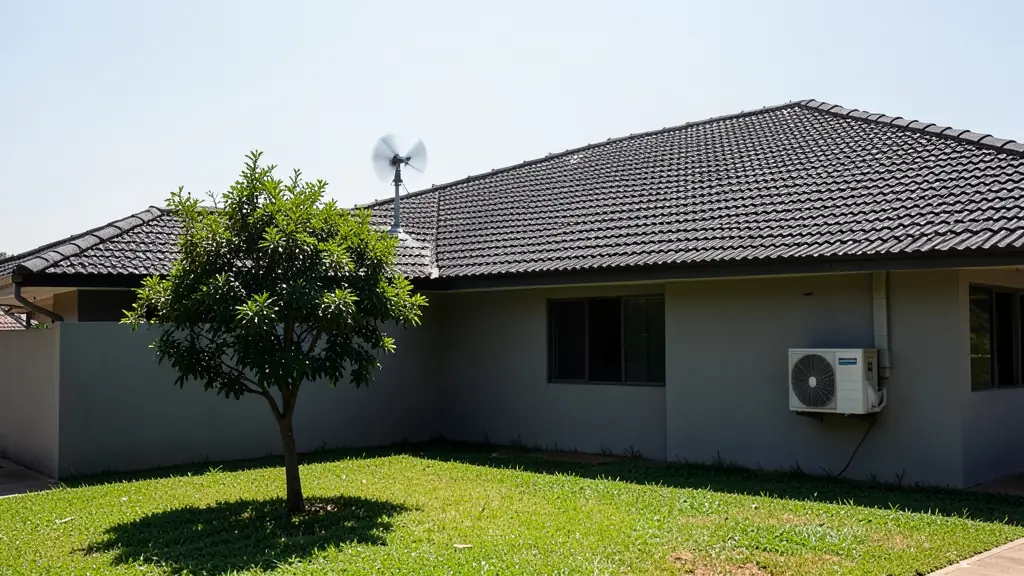
A light coloured roof absorbs less sun than a dark one, so if you are repainting or re-roofing, choose light. Vents let some hot air out: eave vents low down and a ridge vent or whirlybirds near the top set up a flow. They help, but moving air does not stop radiant heat from a hot sheet; insulation does that. Upstairs rooms and rooms under tin roofs gain the most.
Aircon bills and payback
An insulated ceiling keeps rooms cooler for longer, so aircon cycles less and a fan may be enough on many nights. Estimate the heat flow and the saving for your roof with the insulation savings calculator. The figures depend on your town, your tariff and how you cool the house.
What to put in your request
- Say which rooms get hottest and when
- Give the roof type and its colour
- Say if there is foil under the roof now
- Mention the aircon or fans you run
- Note any vents or whirlybirds already fitted
Roof Insulation from Heat: who asks for them and why
- Homeowners and tenants: a bedroom under a dark roof that is still too hot to sleep in at 10 pm
- Landlords, complexes and body corporates: top floor flats under a shared roof where tenants run aircon all summer long
- Builders, developers and architects: new houses in hot zones where foil and a ceiling layer go in before handover
- Offices, shops, churches and clinics: offices, shops and restaurants where the roof heat pushes aircon bills up
- Warehouses, factories and workshops: a factory floor where roof heat adds to process heat and slows the shift
- Farms, poultry houses and packsheds: a farmhouse in the Lowveld or Limpopo where the roof cooks through February
- Schools, creches and public housing: classrooms under a hot roof where learners lose focus after first break
- Guesthouses, lodges, cabins and wendy houses: bush lodge rooms and chalets that must stay cool without big generators