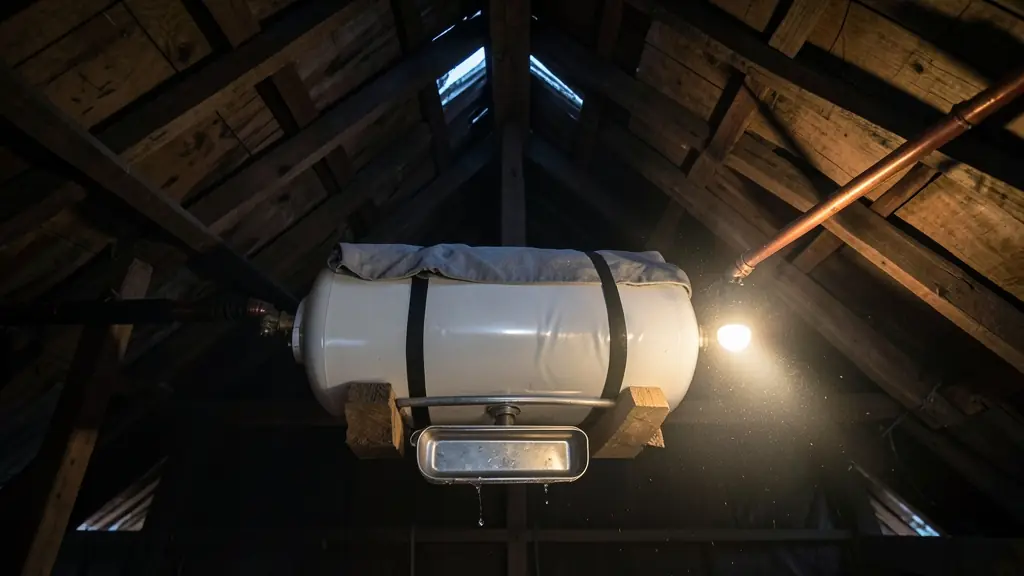
Insulation for pipes and a geyser blanket are the cheapest heat savings in most South African houses. The geyser in the roof space keeps a tank of water hot day and night, and it loses heat through its own skin and through the bare copper running away from it, every hour, even while nobody opens a tap. On a June night in the Free State that roof space can drop near freezing. Wrapping the tank and lagging the first stretch of pipe cuts that standing loss, and outside lines stop bursting.
Where the heat actually leaks out
Older geysers have a thin layer of foam inside the steel shell. Put your hand on one: if the skin feels warm, it is losing heat into the roof all the time. Newer units are better insulated, so a blanket helps most on a geyser that is ten or more years old, or one in a cold, draughty roof space. The other leak is the pipe. Hot water sits in the copper after every tap and cools there, and heat also creeps back along the outlet from the tank. Lag the hot outlet for at least the first two to three metres, and the cold inlet for the first metre, because warm water migrates into it.
Sleeve sizes and materials
- Match the bore. Most house plumbing is 15 mm or 22 mm copper. A sleeve for the wrong size either gapes or splits.
- Wall thickness. Thicker foam holds more heat; on a long run to a far bathroom it is worth the extra.
- Joints and bends. Cut the sleeve at a mitre on elbows and tape every seam, or the gaps undo much of the work.
- The blanket. Sized to the geyser's capacity in litres. It must leave the thermostat and element cover, the pressure valve, the drain and the data plate uncovered.
Solar and heat pump pipes in the sun
Pipes running across a roof to a solar collector or to a heat pump on a wall sit in full sun. Ordinary grey polyethylene foam turns brittle and crumbles there within a few summers. Ask for UV resistant lagging, such as a closed cell rubber sleeve, or a sleeve with a protective wrap. These lines also carry hotter water than a normal geyser outlet, so the sleeve must be rated for that temperature. Check the clips too: wind and birds pull loose lagging off a roof.
Frost, burst pipes and the cold side
In the Mpumalanga and Free State winter, exposed pipes on outside walls, under a stoep or in a garage can freeze overnight and split. Lagging slows that down but does not heat a pipe, so on the coldest nights a dripping tap or a drained line still helps. The geyser blanket and pipe sleeves sit alongside the ceiling layer, not in place of it: see ceiling insulation and work out the bigger saving with the insulation savings calculator.
What to put in your request
- Give the geyser size in litres and its age
- Say how many metres of pipe to lag
- Note the pipe sizes, 15 or 22 mm
- Say if pipes run outside in the sun
- Say if you want it fitted or supply only
Pipe and Geyser Insulation: who asks for them and why
- Homeowners and tenants: a blanket on an old geyser and sleeves on the hot pipe to the main bathroom
- Landlords, complexes and body corporates: lagging and blankets across every unit's geyser, priced once and paid from the levy
- Builders, developers and architects: lagging the hot runs in new plumbing before the ceiling goes up and access gets tight
- Offices, shops, churches and clinics: geysers and long hot water runs in restaurant kitchens, salons and clinic washrooms
- Warehouses, factories and workshops: hot water lines in change rooms and canteens, plus frost protection on outside pipes
- Farms, poultry houses and packsheds: lagging the dairy hot water line and farm house pipes that freeze on Highveld nights
- Schools, creches and public housing: hostel and kitchen geysers with long runs to the showers and ablution blocks
- Guesthouses, lodges, cabins and wendy houses: solar geyser and heat pump pipes across the roof that crack in the sun without UV lagging