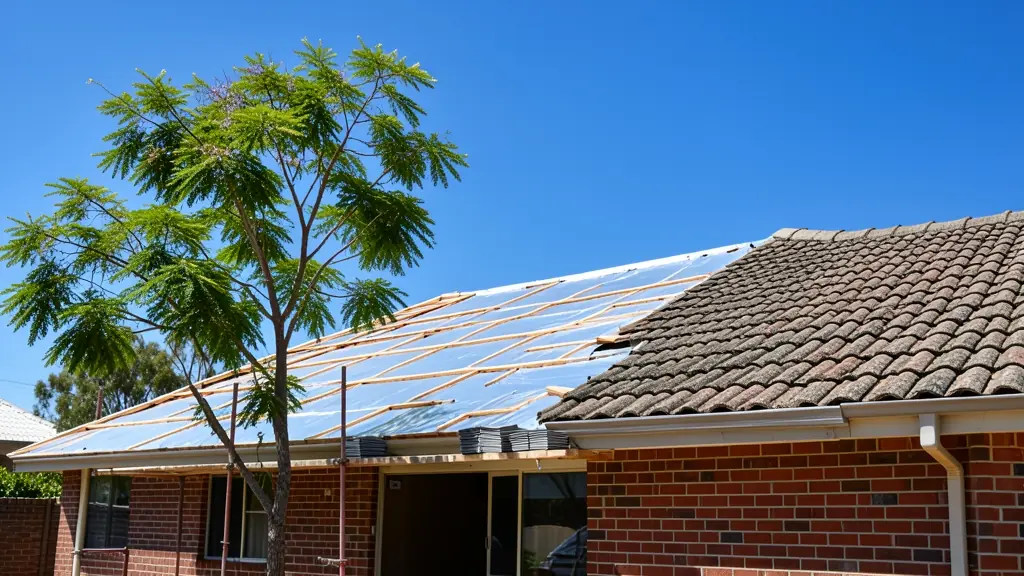
Roof insulation can mean two places: right under the tiles or sheets, or flat on the ceiling below the roof space. Most houses in South Africa need the second and benefit from the first. A layer at roof level keeps the roof space cooler and stops dust, drips and radiant heat. A layer on the ceiling slows heat moving between the rooms and the roof space in both seasons. Where your roof stands now, whether you are re-roofing and whether there is a ceiling at all decide which one, or both.
Roof level or ceiling level
On a pitched roof with a ceiling, the ceiling is where the thick layer belongs: it covers a smaller, flat area, it is easy to reach and it puts the insulation right over the rooms you live in. Insulation at roof level helps the roof space, a room in the roof or a geyser up there. On a house with a hot tin roof, both together give the best result. Lay the ceiling side well with the ceiling insulation calculator.
Under tiles and under sheets
Under tiles, the usual roof level layer is reflective foil laid over the rafters before the battens and tiles go on; it also keeps out dust blown through the tile joints. Under IBR or corrugated sheets you can lay foil, a foil faced blanket over the purlins, or spray foam on existing sheets. Bare sheets drip condensation on cold mornings, so the layer under them is a moisture fix as well as a heat one. See metal roof insulation for sheet roofs.
Retrofit from inside or wait for a re-roof
From inside the roof space you can add a blanket on the ceiling any weekend, and on some sheet roofs fix boards or have foam sprayed. Foil under tiles or a blanket over purlins really goes in when the covering comes off. If your roof is due to be redone, plan the insulation with the roofer; it costs little extra while the roof is open. Old roofs can hold asbestos sheets or old fibre boards: never cut or break suspect material, a registered asbestos contractor deals with it.
Roofs without a ceiling
Open truss lounges, carports turned into rooms and steel sheds have nothing to lay a blanket on. Options are insulation fixed at roof level: a board ceiling under the rafters (see Isoboard ceilings), spray foam, or insulation panels if the roof is being replaced. If the room is new and goes through plans, SANS 10400-XA asks for a minimum R-value across the whole roof in your climate zone; find yours with the zone finder.
What to put in your request
- Give the footprint and roof pitch
- Say tiles, IBR, corrugated or other
- Say if there is a ceiling and what is on it
- Mention if re-roofing is planned
- Name your town for the climate zone
Roof Insulation: who asks for them and why
- Homeowners and tenants: foil under new tiles at re-roofing time plus a thick blanket on the ceiling below
- Landlords, complexes and body corporates: a body corporate re-roof where insulation is added to every unit while the roof is open
- Builders, developers and architects: a roof layer and ceiling layer chosen together to meet the climate zone figure
- Offices, shops, churches and clinics: an office or shop with a hot roof space where aircon ducts and plant sit
- Warehouses, factories and workshops: a steel roof due for new sheets with insulation going on over the purlins
- Farms, poultry houses and packsheds: a farmhouse with an old tin roof and a new outbuilding with no ceiling
- Schools, creches and public housing: classroom roofs replaced under a programme with insulation added at the same time
- Guesthouses, lodges, cabins and wendy houses: open truss chalets and converted barns where the roof itself must carry the insulation