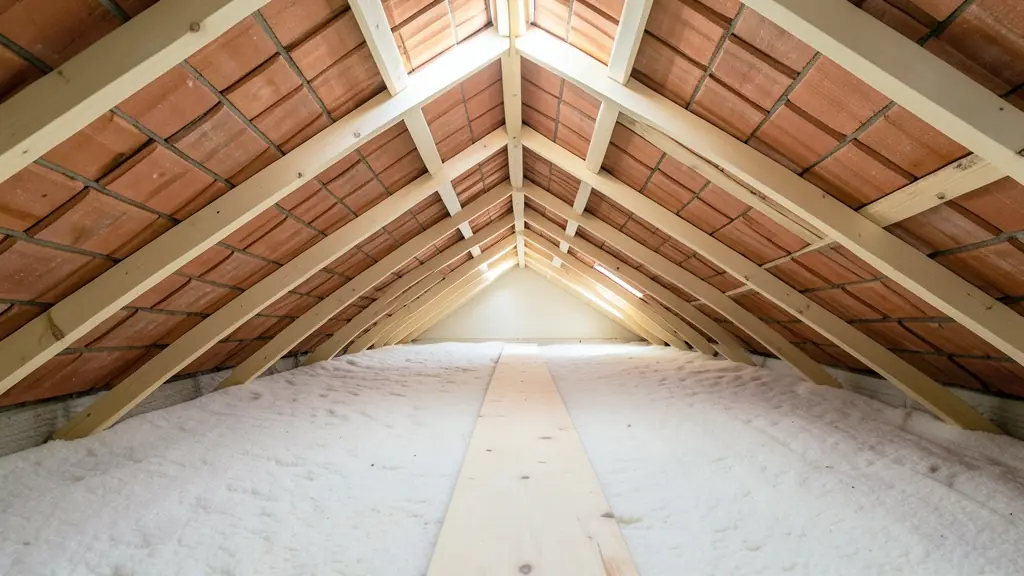
Climb through the hatch of an uninsulated South African house on a January afternoon and you feel the problem at once: the roof space is an oven, and the only thing between it and your bedroom is a thin gypsum or fibre cement board. Ceiling insulation is a layer laid over those boards that slows heat moving through them, in both directions. In summer it keeps the roof's heat up there; in a Highveld winter it keeps the heater's warmth down in the rooms.
Why the ceiling is where the heat gets in
On a summer afternoon the air under dark tiles or tin over a single storey house often climbs past 50 °C, sometimes near 60 °C. That heat radiates down onto the ceiling boards, which pass it straight into the rooms below. Walls are shaded part of the day and brick soaks up heat slowly, but the roof takes full sun from ten till four. That is why, in most homes here, a bare ceiling is the largest single gap in the building, and why insulating it usually beats any other comfort upgrade for the money.
The main materials, side by side
- Polyester blanket, often made from recycled bottles: no itch, no dust. See isotherm insulation.
- Glass wool rolls, the pink or yellow ones: good value, but itchy to lay. See aerolite insulation.
- XPS board that is the ceiling and the insulation in one: isoboard ceilings.
- Stone wool for fire and sound: rockwool insulation.
- Foil and spray foam work at roof level, under the tiles or sheets, and pair well with a blanket on the ceiling.
Compare the R-value, not the colour or the thickness
R-value means thermal resistance, measured in m²K/W, and a bigger number means a slower leak. Divide a layer's thickness in metres by its conductivity and you have it: a 135 mm roll rated at 0.040 W/mK lands near R3.4. Two products of the same thickness can differ, so read the R-value printed on the pack. For new buildings and additions that need plans, SANS 10400-XA sets a minimum total roof R-value by climate zone; the zone finder gives yours, and the ceiling insulation calculator turns your ceiling area into rolls or bags.
What a good job looks like in the roof
Insulation only performs when it lies at full depth and touches the next roll. Squash it under stored suitcases or leave a hand width open along the wall plates and you lose a surprising share of the benefit. Pull it back from any downlight without a cover rating, from transformers and of the geyser's element housing, and leave the electrician's cables on top where they can be found. Old roofs may hold asbestos in the ceiling or under the roof: if anything looks like it, stop and call a registered asbestos contractor.
What to put in your request
- Give the ceiling area in m² or the house plan
- Say what is up there now and its condition
- Mention downlights, the geyser and hatch size
- Ask for the R-value of the quoted product
- Say if you want supply only or fitted
Ceiling Insulation: who asks for them and why
- Homeowners and tenants: a hot upstairs bedroom or a cold lounge fixed by a full blanket over the ceiling
- Landlords, complexes and body corporates: one contractor insulating every unit's roof space, priced per m² against the levy budget
- Builders, developers and architects: the ceiling layer that gets new plans to the SANS 10400-XA roof figure
- Offices, shops, churches and clinics: cooler offices, shops and clinics with lower aircon running hours through summer
- Warehouses, factories and workshops: insulating ceilings of offices, canteens and control rooms inside a hot factory building
- Farms, poultry houses and packsheds: farmhouses and worker housing under bare tin, hot in February and bitter in July
- Schools, creches and public housing: classrooms and halls that stop overheating by noon once the ceiling is insulated
- Guesthouses, lodges, cabins and wendy houses: guest rooms and chalets that stay comfortable without running aircon all night