How thick should ceiling insulation be? The short answer is: thick enough to reach the R-value your climate needs, and that depends on the material. Millimetres only tell you half the story. A 100 mm layer of one product can beat 135 mm of another. This page explains the link between thickness and R rating, what SANS 10400-XA aims for on a new roof, why the common rolls are 135 and 145 mm, and how to measure what is already in your roof.
Thickness and R-value are not the same number
R-value is thermal resistance in m²K/W: the higher, the slower heat gets through. It is the thickness in metres divided by the material's conductivity. Rule of thumb figures:
- 135 mm of a 0.040 W/mK blanket: about R3.4.
- 100 mm of the same: about R2.5.
- 40 mm of XPS board at about 0.032 W/mK: roughly R1.25.
So when you ask about isoboard R value, the board alone is well below a blanket; many board ceilings get a blanket laid on top. Check the figure printed on the pack, not these estimates.
What SANS 10400-XA asks of a roof
SANS 10400-XA sets a minimum total R-value for the roof and ceiling of new buildings and additions that need plans. For a pitched roof with a ceiling it lands roughly between R2.7 and R3.7, depending on the climate zone. The total counts every layer, so a little comes from the tiles, air spaces and ceiling board too. Find your figure with the zone finder. It does not force you to upgrade an existing house, but it is a sensible target, and the building inspector confirms what your plans need.
Why rolls come in 135 and 145 mm
Those sizes exist because they land near the higher zone targets with common blanket products: 135 mm in glass wool, 145 mm in polyester, which is a touch less dense. Thinner rolls, 40 to 100 mm, are made for topping up or for budgets. If you already have 50 mm of old wool, a second layer laid across the joists, at right angles to the first, closes the gaps and adds its R to what is there. Add up the layers with the R-value calculator.
Measuring what you have
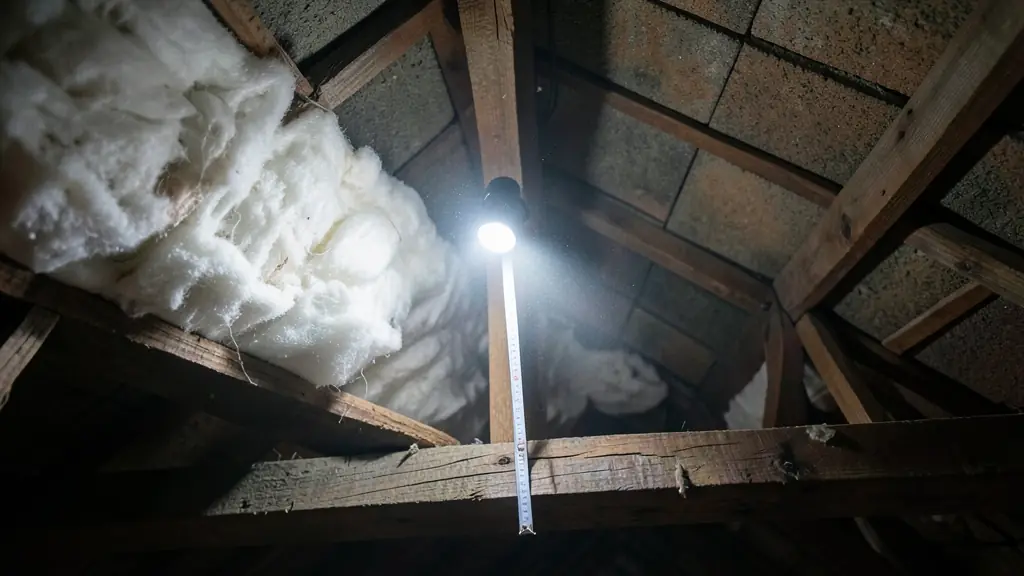
- Take a torch and a steel tape or a ruler through the hatch.
- Kneel on a joist, never on the board between.
- Push the ruler gently down to the ceiling board in five or six spots.
- Note the lowest readings: near the hatch, at the eaves and where boxes have been stored.
Old glass wool settles and gets flattened. A 75 mm roll from twenty years ago might measure 40 mm now, and its R drops with it. Gaps at the wall plates count as zero.
What to put in your request
- Measure the depth of any existing layer
- Name your town so the target R is clear
- Ask for the R-value printed on each product
- Say if plans need a SANS 10400-XA figure
- Give the ceiling area in m²
Ceiling Insulation Thickness: who asks for them and why
- Homeowners and tenants: checking whether the thin old layer in the roof is worth topping up or replacing
- Landlords, complexes and body corporates: setting one thickness and R-value for every unit in the levy funded upgrade
- Builders, developers and architects: reaching the roof R-value on the plans with the right thickness and a certificate
- Offices, shops, churches and clinics: working out how much depth to add over an office ceiling to cut cooling costs
- Warehouses, factories and workshops: specifying blanket depth over office and canteen ceilings inside a steel building
- Farms, poultry houses and packsheds: choosing a practical depth for a farmhouse or staff housing ceiling under tin
- Schools, creches and public housing: matching blanket thickness to a tender's R-value across many classroom ceilings
- Guesthouses, lodges, cabins and wendy houses: deciding how thick to go in small chalet ceilings where roof space is tight