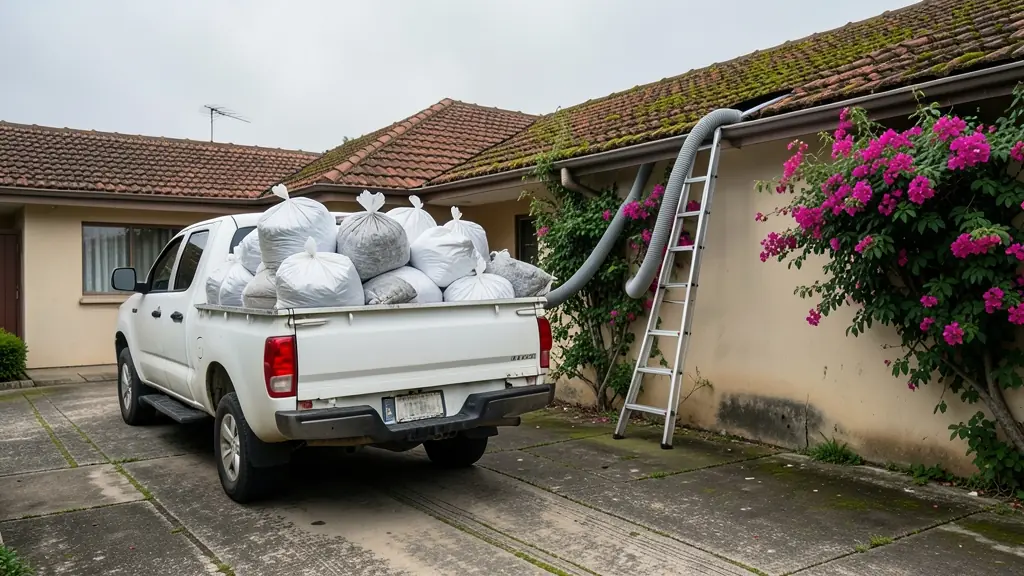
Most old insulation can stay where it is and be topped up. Some cannot. Ceiling insulation removal makes sense when the layer is wet, full of droppings, burnt, flattened to nothing or in the way of a new ceiling. Leaving it can mean smells, stained board, mould and pests that simply move into the new layer. This page covers how to tell which case you have, how removal and replacement work, what happens to the waste, and the one material you must never touch.
Signs the old layer has to go
- Soaked by a leak. Wet wool loses most of its value, stays damp for weeks and stains the ceiling board. Fix the roof first.
- Rats, mice and birds. Nests, tunnels, droppings and a sour smell coming through the downlights. Pigeons under the eaves leave the same mess.
- Fire or smoke. Charred or sooty wool smells for years and should come out with the damaged board.
- Flattened to a few centimetres. Old glass wool that has slumped can be cheaper to clear than to bury.
- A new ceiling. When the board comes down, the wool above it comes down too.
How removal is done
Most crews use an industrial vacuum on a long hose, run from the bakkie or a trailer up through the hatch. The wool is sucked straight into large bags, which keeps the dust out of your rooms. Clean, dry layers are sometimes rolled up and bagged by hand instead. Expect the crew to cover the hatch area, wear masks and overalls, and check for cables and downlights as they go. A typical house is usually a day's work, depending on access and how bad the mess is.
Disposal, cleaning and replacement
Ask who takes the bags and where they go: a proper quote names disposal at a licensed landfill, not your wheelie bin. After a rodent problem, ask for droppings to be vacuumed off the board and for entry points at the eaves to be closed, or the new layer gets the same visitors. Then the new insulation goes in, often polyester, which pests find less inviting. Plan the replacement with the ceiling insulation calculator and see ceiling insulation installers.
The asbestos warning
Older roofs and ceilings can hold asbestos: fibre cement roof sheets, ceiling boards, pipe lagging and some old loose fill. If anything looks like grey board, crumbly lagging or a loose granular fill you do not recognise, stop. Do not cut, sweep, vacuum or bag it yourself. Under the Asbestos Abatement Regulations, 2020, a registered asbestos contractor handles anything that might be asbestos. Tell the installers about it in your request so they can say whether a test is needed first.
What to put in your request
- Say why the old layer must come out
- Mention any leak and whether it is fixed
- Describe signs of rats, birds or smoke
- Flag any old board or lagging you are unsure of
- Say what you want laid in its place
Insulation Removal: who asks for them and why
- Homeowners and tenants: clearing rat soiled or leak soaked wool before a clean new blanket goes in
- Landlords, complexes and body corporates: removing failed insulation unit by unit after roof leaks across a sectional title block
- Builders, developers and architects: stripping old wool before a renovation brings down ceilings and adds a new roof
- Offices, shops, churches and clinics: clearing smelly, soiled wool over a restaurant or shop before health inspections
- Warehouses, factories and workshops: removing wet or contaminated insulation over offices and canteens in older buildings
- Farms, poultry houses and packsheds: clearing nest filled wool from farmhouse and staff housing roofs after a pest problem
- Schools, creches and public housing: replacing flattened or soaked classroom insulation during a holiday maintenance window
- Guesthouses, lodges, cabins and wendy houses: clearing pigeon and rodent damage from guest chalet roofs between bookings