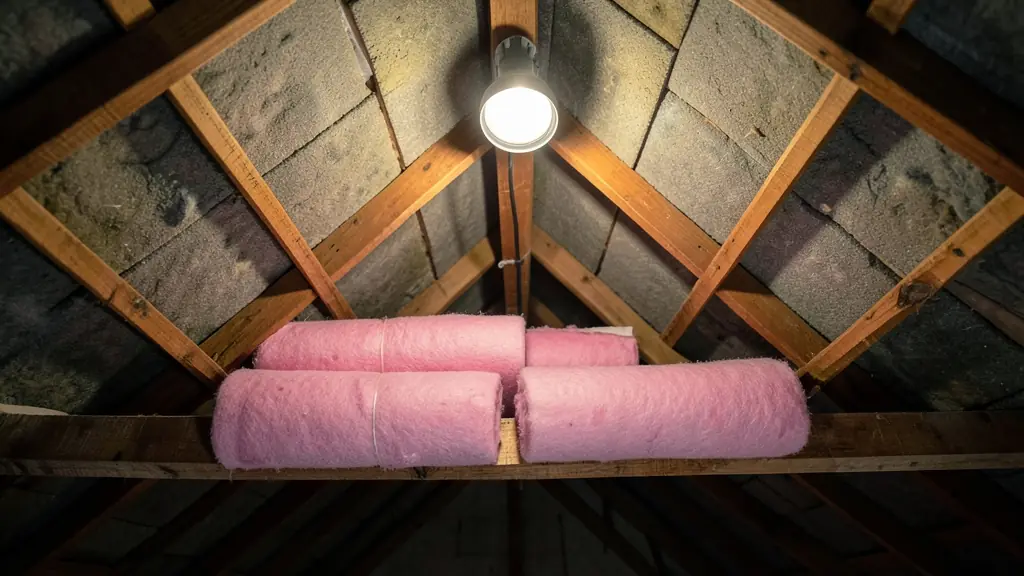
The pink roll is the picture most South Africans have of ceiling insulation. Aerolite insulation is a glass wool blanket, and Aerolite itself is a maker's trade name, so a quote may name that roll or a matching glass wool from another factory. It has been laid in roof spaces across the country for decades because it is light, cheap per m² and does the job well when laid properly. This page covers the 135 mm roll, the itch and how to deal with it, safety questions and the mistakes that cost it performance.
Why 135 mm is the usual ceiling roll
Glass wool has a conductivity close to 0.04 W/mK (the usual band is 0.035 to 0.045). At 135 mm that gives an R-value somewhere around R3 to R3.8 depending on the exact product, which on many South African houses gets the ceiling close to or over the SANS 10400-XA roof figure in one layer. Thinner rolls exist for top ups and walls. Read the R-value on the pack, because two 135 mm rolls from different makers are not always equal, and check your target with the zone finder.
The itch and how installers handle it
Glass fibres are stiff and short, and they prickle skin and eyes. The itch is mechanical irritation, it does not last, and washing in cool water after work helps. Wear:
- gloves and long sleeves with the cuffs closed
- a dust mask rated for fine particles
- goggles, especially when working overhead
- old clothes washed separately afterwards
Some makers sell a soft touch version with a binder that cuts loose fibres. If anyone at home is sensitive, compare it with a polyester blanket.
Keep it dry and keep it fluffy
Glass wool works because of the air in it. Wet wool goes heavy, flattens and can stay damp against the ceiling boards long enough to stain or rot them. Fix roof leaks before laying, and lift and replace any patch that gets soaked. Wool also settles a little over the years and gets flattened by people crawling over it to reach the geyser. A board walkway to the geyser and the DB area saves the layer. If yours has sunk to a few centimetres, a top up across the old rolls restores it.
Laying it so it works
Unroll it between the joists, push it right into the wall plates at the eaves, and butt each roll tight against the next. Cut it with a long bread knife or a utility knife on a board. Give unrated downlights and the geyser's element end a clear ring of space, and do not bury cables. The DIY install guide walks through a full Saturday job, and the calculator counts the rolls.
What to put in your request
- Give the ceiling area and the roof covering
- Say if the old wool is wet or flattened
- Ask whether a soft touch version is quoted
- Mention any roof leaks still to fix
- Say if an equivalent glass wool is fine
Aerolite Insulation: who asks for them and why
- Homeowners and tenants: the standard pink roll laid over a bare ceiling or topping up an old layer
- Landlords, complexes and body corporates: a budget friendly glass wool job across many units, laid by one installer crew
- Builders, developers and architects: the common thickness that new house plans often specify for the roof
- Offices, shops, churches and clinics: shops, churches and offices where low cost per m² matters most
- Warehouses, factories and workshops: office blocks and change rooms on a factory site with ordinary pitched ceilings
- Farms, poultry houses and packsheds: farmhouses and worker cottages, as long as the roof keeps the wool dry
- Schools, creches and public housing: large classroom ceilings insulated on a tight tender budget
- Guesthouses, lodges, cabins and wendy houses: guesthouse ceilings where an installer lays the wool between bookings