
Types of Ceiling Insulation
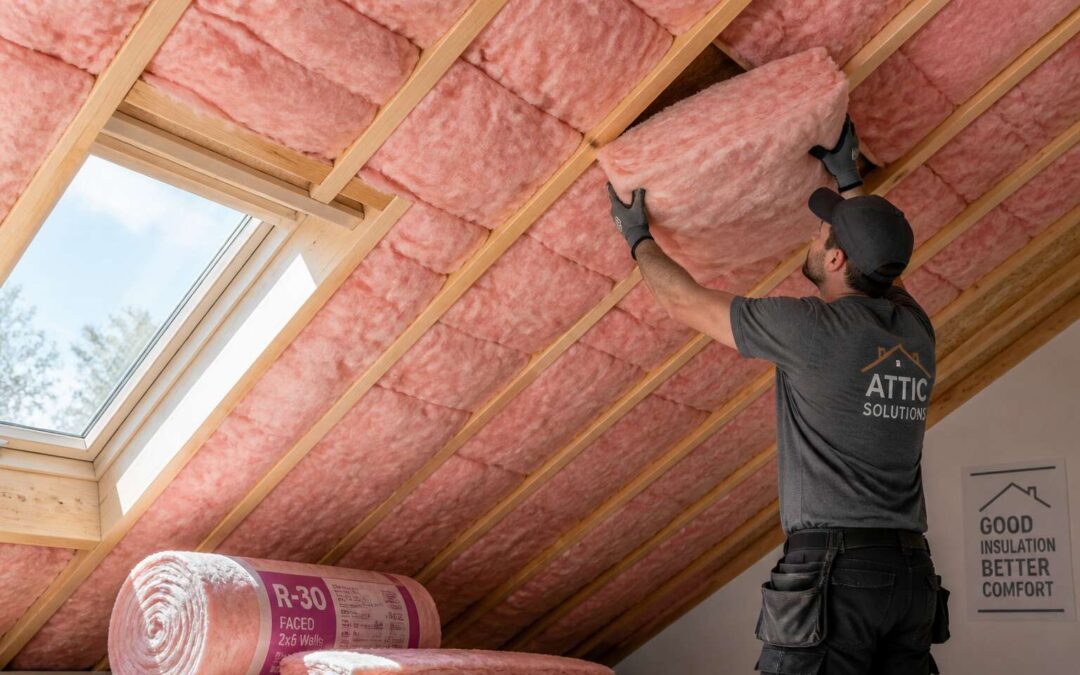
Fiberglass Batts and Rolls
The temperature beneath an uninsulated roof can exceed 50°C on a summer afternoon. Fibreglass batts and rolls offer a reliable defence, and they remain among the most popular ceiling insulation for sale in South Africa.
These pre-cut panels fit neatly between standard ceiling joists, creating a thermal barrier that slows heat flow through your roof space. The material is formed from fine glass fibres compressed into a dense mat. Typical thicknesses range from 100mm to 200mm, with higher R-values providing greater resistance to heat transfer. In my experience, the 150mm option balances cost and comfort well for most homes. For warmer regions, an R-value of 3.5 or higher suits typical conditions.
Installation is straightforward for capable DIYers, though protection matters:
- Wear gloves and long sleeves to prevent skin irritation
- Wear a dust mask to avoid inhaling glass particles
- Fill every corner and gap completely
Batts align with standard joist spacing, while rolls cover large uninterrupted areas efficiently. Both options offer dependable performance at reasonable prices.
Spray Foam Insulation
Spray foam is the overachiever of the insulation world. It arrives as a liquid and expands into a dense, airtight seal that conforms to every pipe, wire, and awkward corner. Batts rest between joists; spray foam penetrates every crevice. That intimacy comes at a price, but few materials match its ability to stop draughty airflow.
Two main types matter. Open-cell foam is softer and more forgiving, while closed-cell foam is rigid, moisture-resistant, and offers roughly twice the R-value per inch. In my experience, the choice often comes down to your climate and budget.
- Open-cell: lower cost, better for soundproofing
- Closed-cell: higher R-value, acts as a vapour barrier
When browsing ceiling insulation for sale in South Africa, spray foam is usually the premium option. It pays off in older homes where gaps and cracks defeat batts entirely.
Rigid Foam Boards
Rigid foam boards are the quiet perfectionists of the insulation world. They arrive as solid panels, typically made from extruded polystyrene or polyisocyanurate, and they offer a uniform thermal barrier that batts simply cannot match. In my experience, these boards excel in flat, uncomplicated ceiling spaces where their stiffness becomes a virtue.
Consider their character:
– High compressive strength for areas that need support
– Moisture resistance that endures South African humidity
– Consistent R-value without settling over time
When you compare ceiling insulation for sale, rigid boards often represent the middle path. They demand a careful hand during installation, but their performance rewards precision with years of steady comfort.
Loose-Fill and Blown-In Insulation
Heat rises, and South Africa’s ceiling cavities often let that warmth escape unnoticed. Loose fill and blown in insulation answer this with a layer of cellulose or mineral wool, sprayed under pressure into every gap. For irregular joists, old roofs, or retrofit projects, this method fits where rigid boards cannot go.
Your search for ceiling insulation for sale gains these advantages:
- Complete coverage of awkward spaces
- Sound absorption alongside thermal resistance
- Simple top ups as settling occurs
Professional installation ensures the right density, creating a steady layer that holds its R-value. The result is a home that stays cooler in summer and warmer in winter, without a single visible seam.
Key Benefits of Insulating Your Ceiling
Energy Efficiency and Lower Bills
In South Africa, an uninsulated ceiling can lose up to 30% of your home’s heat on a winter evening. That loss forces geysers and heaters to work harder, which shows up on your electricity bill. Choosing ceiling insulation for sale changes this pattern, and the savings appear almost immediately!
Once warmth stays trapped, heating cycles shorten and become less frequent. Over a year, those gains translate into thousands of rands saved, especially through Highveld winters. A stable indoor temperature also reduces thermal discomfort, so your evenings feel relaxed without constant heater adjustments.
Installation alone has cut power bills by a fifth in homes I know. That relief matters on the body and the budget.
Improved Indoor Comfort
A home with a properly insulated ceiling feels different. In the Highveld, afternoon temperatures can drop sharply after sunset. A well insulated ceiling keeps the inside temperature steady. I notice it the moment I walk in from outside. No sudden chill. No stuffy heat lingering from the day.
ceiling insulation for sale in South Africa comes in several forms, but the comfort benefit remains consistent. Rooms stay warmer in winter and cooler in summer. That balance matters for sleep, for concentration, and for evening relaxation after work.
- Reduces temperature swings between day and evening
- Limits the need to adjust layers indoors
- Dampens noise from rain on the roof and wind outside
The comfort is practical. A stable indoor climate removes the daily irritation of a house that feels like a freezer or an oven. When you buy ceiling insulation for sale, you are purchasing that stability. For families with young children or older members, it is worth more than the savings on a power bill.
Noise Reduction and Acoustic Control
Most people never notice how noisy their home is until the noise disappears. I spent an afternoon in a house with exposed ceilings while summer rain fell, and the sound was relentless. The ceiling served as a surface that amplified every single drop. After the homeowner installed insulation, the same storm became a distant murmur. What a change!
Insulation absorbs acoustic energy through friction inside the material. Sound waves slow down and lose force. The ceiling cavity, which separates the roof from the living space, either transmits sound or dampens it.
Consider what enters through an uninsulated roof:
- Impact noise from hail and heavy rain
- Wind vibrations across corrugated iron sheets
- Movement of birds or rodents in the cavity
Rooms become calmer. Conversations stay in their room. For anyone researching ceiling insulation for sale, the acoustic comfort is felt immediately, sometimes before the thermal benefits are noticed.
What to Consider Before Purchasing
Understanding R-Value and Climate Zones
South Africa’s weather operates as a patchwork of microclimates. A R-value that suits the freezing Highveld nights falls short of the demanding temperatures along certain coastal belts. Before you search for ceiling insulation for sale, examine your attic’s existing structure. Air leaks quietly undo the finest materials. The best thermal performance begins with a complete seal.
Here is a practical list of what merits your attention:
- Analyze your region’s heating degree days, not merely average temperatures.
- Account for your roof’s pitch and its exposure to western afternoon heat.
R-value quantifies resistance to heat flow. Yet climate zones impose distinct requirements. Inland winters with their frost require higher thresholds. Humid regions simply demand better ventilation to prevent moisture entrapment. Check the product’s certification against South African National Standards. This diligence spares you from future regret.
Comparing Material Costs and Lifespan
The cheapest ceiling insulation for sale often becomes the most expensive decision within a decade. I have watched homeowners choose the lowest upfront price, only to face sagging, compressed material and rising energy bills five years later. Cost per square metre means little without factoring lifespan and performance retention.
Compare products honestly before committing. Some materials resist moisture and pests for thirty years; others settle and lose R-value quickly. Ask about warranty terms and how the insulation behaves under real attic conditions.
- Extruded polystyrene: higher price, long lifespan, moisture resistant
- Glasswool: moderate cost, stable if kept dry, needs proper sealing
- Cellulose: affordable, but prone to settling and moisture damage
That comparison shapes your real investment. Spending a little more on durable ceiling insulation for sale today beats replacing everything too soon.
Evaluating Installation Difficulty
Before you settle on a price, consider how the material will actually get into your ceiling void. I have crawled through enough South African roof spaces to know that access changes everything. A product that requires two-person panels becomes a struggle in a low-pitched roof with a small manhole.
- Measure your manhole opening and truss spacing first
- Check for existing wiring, ducting, or water pipes in the void
- Ask whether the product needs special cutting tools or protective gear
Some ceiling insulation for sale looks simple on paper, but installation difficulty determines whether a DIY job takes a weekend or a month. Blown-in options need a machine. Rigid boards need precise cutting around obstructions. Match the material to your physical situation, not just the brochure.
Check for Rebates and Incentives
According to the South African National Energy Development Institute, uninsulated roofs can account for up to 35% of a home’s heat loss. That figure makes the upfront cost of ceiling insulation for sale easier to justify, especially when you factor in available financial relief. Many homeowners overlook rebates and incentives because they assume these only apply to solar or heat pumps. In reality, several local municipalities and Eskom’s energy efficiency programs offer cashback or reduced tariffs for residential insulation upgrades.
To avoid missing out, do this:
– Contact your local municipality’s energy office and ask about current insulation interventions.
– Check Eskom’s demand side management initiatives for residential rebates.
– Ask your insulation supplier about bulk purchase discounts or installer partnerships.
These incentives can shave a meaningful percentage off the total price. The conditions vary, but most require a basic energy audit. A quick phone call might make ceiling insulation for sale far more affordable than you expected.
Fire Resistance and Safety Ratings
Fire resistance often loses out to thermal performance when you compare ceiling insulation for sale. That is a dangerous oversight. A material’s reaction to fire can determine whether a small electrical fault becomes a structural disaster. Look for insulation with a Class A1 or A2 fire rating, which indicates non-combustible or limited combustibility. Also check for a valid test certificate from a recognized body such as the South African Bureau of Standards.
When comparing options, pay attention to these factors:
– The core material’s melting point.
– Whether the facing or foil backing is flammable.
– The manufacturer’s installation guidelines regarding gaps and proximity to heat sources.
These details might seem minor, but they affect both safety and insurance claims. A low fire rating is not worth the savings. Prioritize verified safety data over price, and your ceiling insulation for sale purchase will protect more than your energy bill.
Where to Shop for Insulation Products
Big-Box Home Improvement Stores
Big-box home improvement stores offer a wide selection of building materials. You walk in for screws and exit with a trolley full of surprises. When it comes to ceiling insulation for sale, these retail giants provide convenience and volume. They stock fiberglass to rigid boards, and prices reflect bulk buying power.
The Saturday crowd is a spectacle. The aisle with ceiling insulation for sale doubles as a meet-and-greet. Staff knowledge varies. One hireling explains R-values with zeal, another points at the rafters. The return policy is merciful. A misjudged box of batts swaps without a fuss.
- Check the online stock before driving
- Compare per square meter pricing
- Bring a tape measure, not guesses
South African homeowners find these stores a straightforward bet. The range is broad, the parking is free.
Local Building Material Suppliers
Three out of five roofers I know source from local suppliers, and there is a reason for that. Local building material suppliers in South Africa offer something the big chains cannot replicate: direct access to regional expertise. They understand which ceiling insulation for sale suits the Highveld versus the coast. A conversation with a supplier who has installed products for decades beats any online comparison.
I have found that smaller yards often stock offcuts or discontinued lines at significant discounts. They also know the installation quirks of local roof trusses, which saves you from costly mistakes.
- Whether they deliver to your suburb
- If they offer installation referrals
- Their stock levels for ceiling insulation for sale during winter peaks
These suppliers may not have the glossy showroom, but their knowledge is practical. And that matters when your ceiling is already open.
Online Retailers and Bulk Ordering
Online retailers have changed how we source building materials, but they demand a certain nerve. You cannot run your fingers across a roll of fiberglass through a screen. What you gain is price transparency and the ability to compare dozens of ceiling insulation for sale options without leaving your office.
Bulk ordering is where the real savings appear. Most ecommerce platforms offer tiered pricing, and delivery to a site in Johannesburg or Durban often beats hauling bags yourself. Just confirm the supplier’s return policy before you commit.
- Check whether the quoted price includes pallet delivery
- Ask about lead times for large quantities
- Verify the product batch matches the R-value stated online
One caution: online stock levels can lie. A supplier may show ceiling insulation for sale, then phone you a day later to apologise. That is why I always call before paying.
Installation Tips and Safety Practices
Measuring and Cutting Insulation Correctly
A single crooked cut can undermine the entire thermal envelope, yet many homeowners treat measurement as an afterthought. In South Africa, where ceiling voids often hide uneven trusses and unexpected beams, accurate sizing demands respect. Before you search for ceiling insulation for sale, measure the cavity width at three points, because timber is rarely straight.
Use a straightedge and a sharp blade to score the facing, then snap the board cleanly. For awkward spaces, press the insulation into place and mark the excess with a pencil, leaving a 5 mm gap for expansion. Always wear gloves and a dust mask, as tiny fibres irritate skin and lungs.
- Measure the joist spacing at both ends
- Cut 20 mm wider than the measured gap
- Check for obstacles like wiring or pipes
This method prevents compression, which reduces R-value. No amount of ceiling insulation for sale performs well if crammed or torn!
Essential Protective Gear for Handling
Installing insulation in a South African ceiling void is grimy work. Temperatures inside the roof space can climb past forty degrees, and the dust sits thick on every surface. Before you fetch that ceiling insulation for sale from the store, plan your protective routine. A dust mask rated P2 is non-negotiable; the fine fibres from fibreglass and mineral wool irritate the airways within minutes.
The essentials should include:
- Thick rubber gloves
- Safety goggles with side shields
- A long-sleeved shirt tucked in
- A headlamp, not a torch
Wear a hard hat if the roof sheathing has protruding nails. Most injuries happen when you shift position quickly. Sweat mixed with dust turns skin raw, so tape your cuffs and collar. Some contractors apply a barrier cream to the neck and forearms first. Even loose-fill options sold as ceiling insulation for sale produce airborne particles that demand the same level of care. Contractors who treat that gear as work equipment, not as an optional extra, finish with their skin intact.
Ventilation and Airflow Considerations
A roof void must breathe. When you install ceiling insulation for sale, you are altering the airflow of the entire home. Blocked eave vents lead to condensation, mildew, and a slow decay of the timber trusses above.
Installation demands restraint. Lay batts or loose-fill with a deliberate eye on the perimeter.
- Leave clear space between insulation and the roof sheathing at the eaves.
- Never push material into soffit vents or gable louvres.
- Seal gaps around downlights with fire-rated covers.
Ventilation crossflow matters in winter as much as in summer. Warm air rising from the living space below seeks the coldest surface. A poorly ventilated roof sheet becomes that surface, and condensation drips onto your freshly laid insulation. Moisture strips the R-value straight out of the product. Treat the airflow as carefully as the insulation, and the ceiling void stays dry and stable.
Dealing with Odd Spaces and Obstacles
Every ceiling void hides jagged geometry. Pipes, cables and support beams fracture the open area into awkward segments. You cannot dump this ceiling insulation for sale into the void and expect it to settle correctly. A batt that bends around wires leaves voids, and voids defeat the purpose. Measure each cranny individually. Cut with a sharp knife and tuck the edges flush against the framing.
Electrical boxes and recessed lights need special care. Never bury a junction box under insulation. Leave a clean margin around any heat source. If you meet a duct, sheet it over with insulation but keep the airflow path clear.
- Sloped eaves near the roof edge
- Penetrations for wiring and plumbing
- Narrow chases between joists and ductwork
Position yourself safely on a crawl board. Work from the perimeter inward so the finished layer stays uniform. For the ceiling insulation for sale to perform, the tricky spots matter more than the open floor.
Avoiding Compressed Insulation Pitfalls
Compressing a batt is the fastest way to sabotage its thermal performance. The air pockets that block heat transfer collapse, and the R-value drops sharply. When you buy ceiling insulation for sale, respect the stated loft. Do not force a thicker batt into a shallow cavity. Choose the right thickness for the space instead.
From a safety perspective, compressed insulation also hides problems. A dense pack around wiring traps heat. Keep a clear zone around any fixture. Always work from a crawl board to avoid pressing down on already installed batts. Wear a dust mask and long sleeves.
Common mistakes to avoid:
- Stacking extra layers on top of each other
- Tucking batts under pipes to make them fit
- Kneeling directly on the insulation
Allow each batt to recover its full thickness after placement. The performance depends on the air space remaining intact.
When to Call a Professional Installer
Installation begins with a clear plan. Lay out your ceiling insulation for sale in strips that match your joist spacing before unrolling anything. This prevents gaps and uneven coverage that quietly weaken performance. Work slowly and methodically across the attic, using a crawl board to distribute your weight evenly. Never leave a section half-finished, as moisture can settle into exposed batts overnight.
Some situations demand professional help. Consider calling an installer when:
- Your ceiling has extensive wiring or recessed lighting fixtures.
- You notice stains, mold, or prior water damage.
- The attic space is cramped or difficult to navigate safely.
A professional can assess structural issues and ensure the insulation integrates safely with your home’s systems. They also know local building codes and can spot problems you might miss from a ladder.